
On March 28, the 22nd International Congress on Luobing Theory was held in Shijiazhuang, Hebei Province. The conference, themed “Inheritance, Openness, Innovation, and Integration”, brought together over 10 academicians of the Chinese Academy of Engineering, including Liu Depei, Zhang Boli, Zhang Yun, and Wu Yiling, as well as experts and scholars from the United States, Canada, Thailand, Vietnam, Singapore, and other countries and regions. Participants engaged in both online and offline discussions, sharing clinical application experiences and research achievements made in the theory of collateral diseases, highlighting the remarkable progress in the discipline’s development, and advancing the theory’s further inheritance, innovation and development. Zhang Boli, academician of the Chinese Academy of Engineering and Master of Traditional Chinese Medicine; Wu Zhendou, Director of the Department of International Cooperation at the National Administration of Traditional Chinese Medicine; Wang Guochen, Vice President of the China Association of Chinese Medicine; Jiang Jianming, Party Secretary and Director of the Health Commission of Hebei Province; and Wang Xiankun, Deputy Secretary of the Shijiazhuang Municipal Party Committee and Mayor, attended the conference and delivered speeches.
Zhang Boli stated that the theory of collateral disease and its application research exemplify the high-quality development of traditional Chinese medicine. By establishing an academic innovation and transformation model of “theory + clinical practice + new drug development + experimentation + evidence-based research”, the theory guides clinical practice, drives the development of innovative traditional Chinese medicines, and endows them with profound scientific significance and clinical value. It has led to breakthroughs in treating major clinical diseases and significantly advanced the deep integration of technological innovation and industrial innovation in traditional Chinese medicine. Guided by the philosophy of integrating traditional Chinese and Western medicine, high-quality evidence-based evidence has been obtained for collateral-regulating drugs. The study on atherosclerotic plaques in acute coronary syndrome led by Zhang Yun employed the international “gold standard” for evaluating vulnerable plaques for the first time, providing high-quality imaging evidence that Tongxinluo Capsules stabilize coronary vulnerable plaques, offering an effective drug solution for stabilizing vulnerable plaques and reducing cardiovascular events. The findings were published in the journal Signal Transduction and Targeted Therapy and have been highly praised by the academic community both domestically and internationally, marking a significant advancement in contemporary collateral disease research.
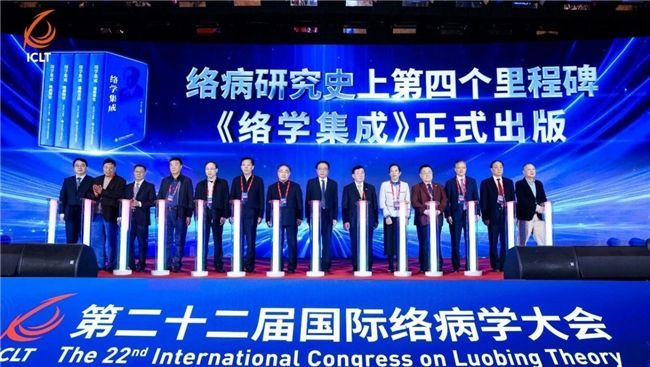
Wang Guochen noted that the Specialty Committee on Collateral Disease of the China Association of Chinese Medicine has successfully organized 22 International Collateral Disease Conferences, establishing a premier academic exchange platform in the field of traditional Chinese medicine. It has actively promoted the inheritance, innovation, and development of collateral disease studies, making the conference a flagship event of the Association. It has also sparked a trend of studying, inheriting, and applying the theory of collateral diseases both within and outside this field. Particularly since 2024, successful overseas forums have been held to vigorously propel the international spread of collateral disease studies through brand academic events. The LuoXue Integration embodies decades of wisdom from China’s expert research team, marking a new chapter in the deepening development and groundbreaking achievements of collateral disease studies.
Jiang Jianming stated that collateral disease theory, as a vital component of traditional Chinese medicine, has continually achieved theoretical breakthroughs and practical innovations. The expert team represented by Wu Yiling has worked to refine the theoretical system of collateral diseases and transform research from theoretical innovation to clinical application, making significant contributions to the advancement of traditional Chinese medicine and the development of the healthcare sector.
At the main forum of the conference, Academician Wu Yiling of the Chinese Academy of Engineering detailed in his keynote report the history of constructing the theoretical system of collateral diseases and the major scientific achievements in innovation and transformation. Jia Zhenhua, Chairman of the Specialty Committee on Collateral Disease of the China Association of Chinese Medicine, presented the specifics of pulmonary collateral disease diagnosis and treatment in guiding research on the prevention and management of respiratory diseases. Academician Zhang Yun of the Chinese Academy of Engineering and Professor Zhang Cheng from Qilu Hospital of Shandong University presented the results of the randomized, double-blind, placebo-controlled, multicenter clinical trial (TXL-CAP study) evaluating the effects of Tongxinluo Capsules on atherosclerotic plaques in patients with acute coronary syndrome. Professor Zhao Jiajun from Shandong Provincial Hospital Affiliated to Shandong First Medical University and Professor Yang Yuejin from Fuwai Hospital of the Chinese Academy of Medical Sciences, along with three other experts, introduced the research progress on the systematic intervention of collateral drugs in the comprehensive management of the cardiovascular event chain from different perspectives. Professor Jia Hongxiao from Beijing Anding Hospital Affiliated to Capital Medical University shared clinical experience in the integrated treatment of depression using both Chinese and Western medicine.
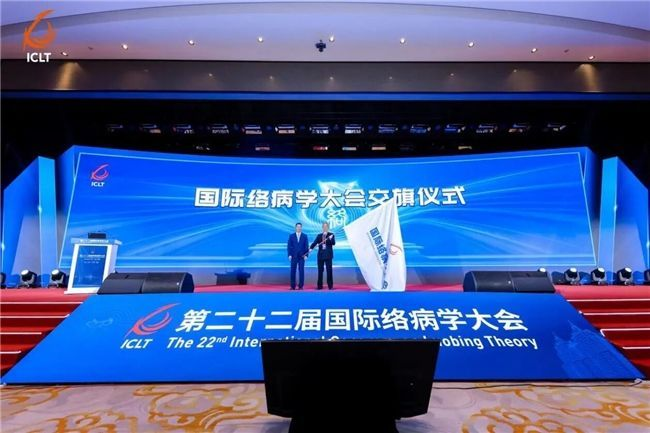
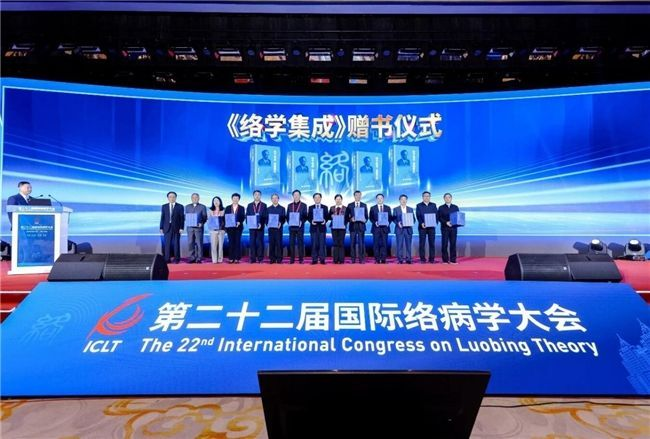
The conference held a flag-handover ceremony for the International Collateral Disease Conference, marking that the overseas forum of the 22nd International Congress on Luobing Theory will be held in Singapore in the fall of 2026. The LuoXue Integration was released concurrently, followed by a book donation ceremony.
The conference also featured specialized sessions, including the Coronary Heart Disease Session, Cerebrovascular Disease Session, Arrhythmia Session, Heart Failure Session, Diabetes and Retinopathy Session, Urology Session, Respiratory Session, and Allergic Rhinitis Session. The experts at the conference engaged in in-depth discussions on how the theory of collateral diseases can serve public health across disease fields. The launch event marking the 30th anniversary of the release of collateral-regulating drugs was held concurrently.
The conference was jointly organized by the China Association of Chinese Medicine, the Chinese Geriatrics Society, and the China Rural Health Association, and hosted by the Specialty Committee on Collateral Disease of the China Association of Chinese Medicine, the Hebei Institute of Collateral Disease Innovation and Medicine, and the National Key Laboratory of Theory of Collateral Disease Innovation and Transformation. Zhang Chaoyang, President of the China Rural Health Association, Xu Jiaren, Vice President of the Chinese Geriatrics Society, and leaders from many traditional Chinese medicine universities attended the conference.